


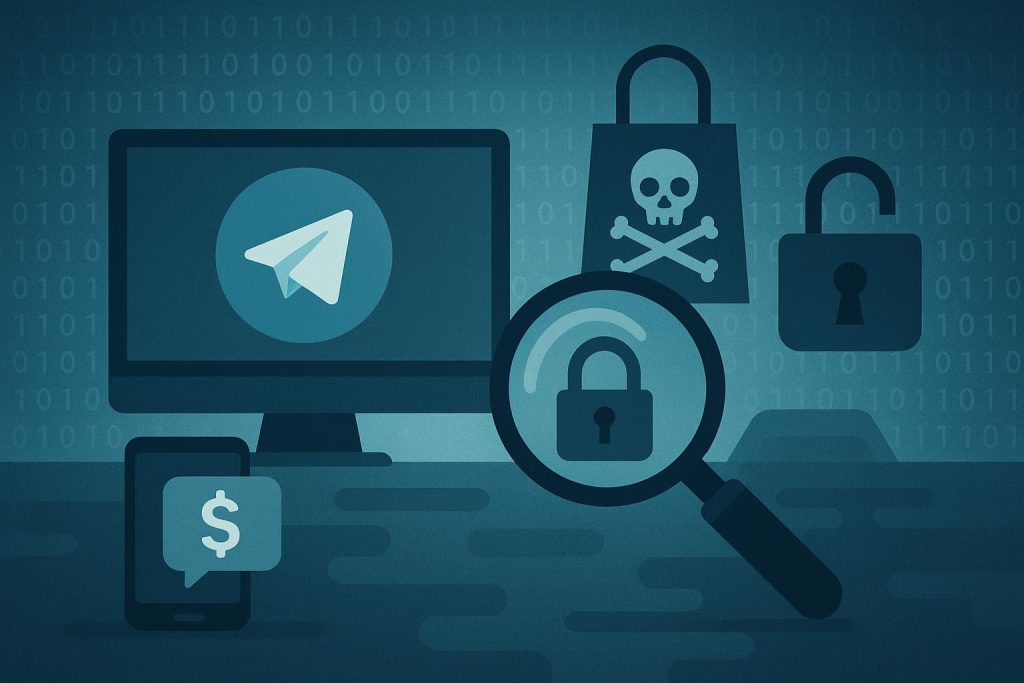
Would you believe it if someone told you that a growing amount of financial crime is being planned, plotted, and executed in plain sight? Would it surprise you to learn that cybercriminals use publicly available platforms like Telegram to ply their trade? It’s true.
Even though the dark web is home to the majority of cybercrime and hacking, threat actors are not opposed to using the same online platforms the rest of us use for casual conversations. As such, strategies like Telegram fraud monitoring are now a thing in cybersecurity. In fact, monitoring Telegram has evolved from a niche investigative tactic into a mandatory requirement for cybersecurity teams, financial institutions, and even healthcare.
Why Telegram Is So Attractive
Given that the dark web offers a much more secretive and anonymous environment, it might seem strange that a widespread platform like Telegram gets so much attention from criminals. So what makes it so attractive? For starters, Telegram has a very low barrier to entry.
Getting onto the darknet requires a bit of advanced knowledge along with specialized software tools. Most people do not know how to do it. So people just getting their feet wet in the cybercrime game look for something easier. Telegram represents an easier entry point. But there is more:
- Easy Scaling – The platform makes it easy for criminals to scale their operations with little effort. Thanks to automated bots and multiple broadcast channels, criminals can move around and do what they do pretty easily.
- Recruiting – Telegram’s reach makes it a great recruiting resource. Criminals looking for money mules or other low-level operators can literally post ads and simply wait for the replies.
- Automated Trading – The platform makes it easy to trade stolen identities and bank information in real time. Automated bots do all the heavy lifting, requiring no technical knowledge from the criminals looking to buy and sell data.
- Fraud-as-a-Service – Telegram’s usefulness as an ecommerce platform has given rise to fraud-as-a-service (FaaS). Hackers develop sophisticated phishing kits, social engineering packages, etc. then turn around and sell them on Telegram.
What makes this so intriguing from a cybersecurity standpoint is that it all happens in real time. This one characteristic is what DarkOwl says makes Telegram so attractive to investigators. Real-time data makes Telegram fraud monitoring an invaluable resource in the fight against cyber fraud.
What Happens When Fraud Is Detected
Companies like DarkOwl provide Telegram fraud monitoring platforms that cybersecurity teams deploy to proactively look for signs of fraud before catastrophic failure occurs. The big question for many C-suite executives is this: what happens when fraud is actually detected? DarkOwl points to four things in particular:
- Verification and Triage – Any discovered data is authenticated first. Is it a new leak or simply recycled data? If analysis determines a genuine threat, context determines how urgent that threat is.
- Account Take-Down – Security analysts often work with Telegram’s security team to report and take down fraudulent channels. A take-down will not necessarily stop a cybercriminal permanently, but it will slow him down and make his life more difficult.
- Credential Resetting – Security teams force password resets and invalidate session tokens to prevent unauthorized access.
- Correlation – Telegram threat intelligent data is correlated with other darknet data to help investigators build a more complete profile of the threat actor and his intentions.
Despite Telegram taking aggressive steps to curb illicit activity in recent years, the platform is still widely used by fraudsters. This suggests that Telegram fraud monitoring is not an option for financial institutions, healthcare institutions, and any others impacted by cyber fraud. It is a must-do strategy.