


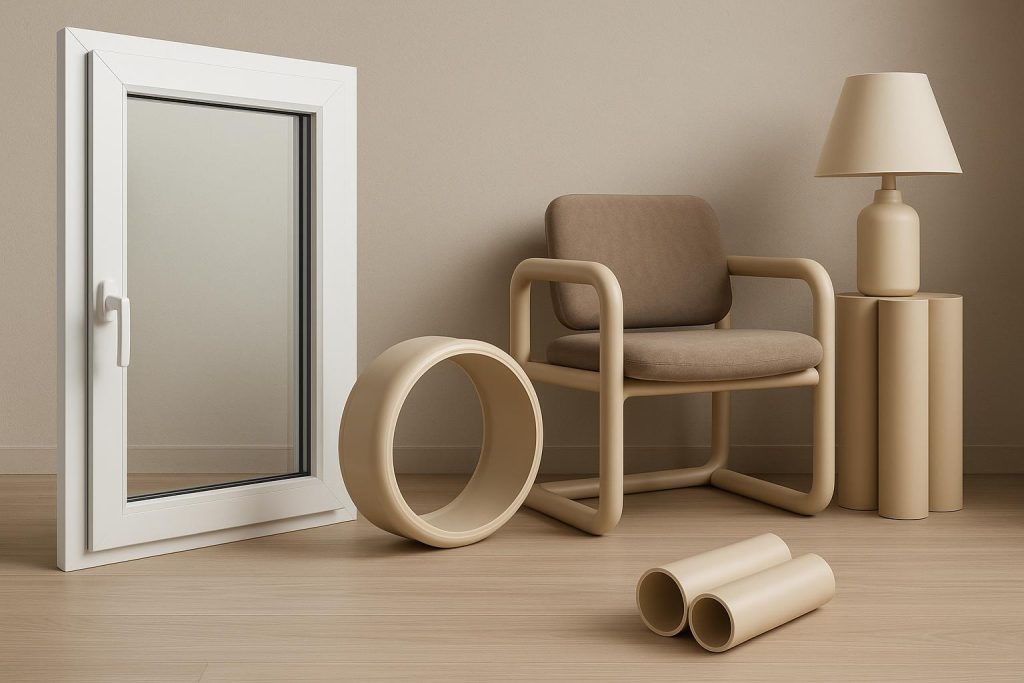
When we walk though our homes or catch a glimpse of a modern window frame, we rarely stop to think about the incredible journey materials take to reach us in such diverse and functional forms. Polyninyl chloride, better known as PVC, is one of the most versatile polymers on the planet. Its presence in our homes is no accident: it combines a level of durability and aesthetic flexibility that few other materials can match.
Yet, we often overlook the high-level engineering hidden beneath the smooth surface of a window frame or a high-tech floor. This process transforms a simple powder into a flawless semi-finished product. It all happens inside complex machinery where raw materials are heated and molded with extreme care to meet the rigorous insulation and durability standards that are non-negotiable in contemporary construction. Understanding how these everyday objects are born helps up better appreciate the technology that ensures our comfort and our buildings’ energy efficiency.
The Technological Heart of Industrial Transformation
The true unsung hero of this production chain is the PVC extruder. This machine is tasked with taking the polymer mix and transforming it – through a precise combination of heat and pressure – into a continuous profile with a defined shape. Think of this machinery as a sophisticated system where one or two screws rotate inside a heated barrel, forcing the material towards a die that determines its final cross-section with near-perfect precision.
This process is what makes it possible to create hollow window profiles, heavy-duty piping or sleek interior design components. It ensures that every single inch of material produced is identical to the last in terms of density and strength. Without the thermal and mechanical stability guaranteed by this tech, we would not have the high-performance products that effectively insulate our homes from the cold and outside noise for decades on end.
From Eco-Building to Design: A Material in Constant Evolution
The world of interior design has rediscovered PVC as a premium resource, valuing the versatility that makes it the perfect match for anyone looking to blend style with practicality.
By faithfully mimicking natural textures like wood or stone, extruded products are now used to create luxury vinyl flooring that actually outperforms the original materials in terms of wear and moisture resistance. This versatility also aligns with the principles of a circular economy: modern production processes allow for increasingly high percentages of recycled content without compromising the quality of the finished product. The result is home décor that is not only beautiful to look at and touch but also actively helps reduce industrial waste. It is a clear sign that polymer chemistry is evolving towards a future that is much more respectful of both environment and our health.
Quality and Precision for Home Safety
The final leg of the journey that brings PVC into our homes involves rigorous testing of
mechanical performance. Every object has to guarantee safety and stability for decades without warping or fading. The precision achieved by today’s extrusion machinery allows for the creation of complex internal geometries – like the air chambers found inside window profile – which are essential for breaking the transfer of heat between the indoors and outdoors. In real-world terms, the technology used on the factory floor translates directly into power energy bills and a smaller carbon footprint for home heating.
Every time we close a window or walk across a modern floor, we are benefiting from a production chain that has successfully married the strength of heavy machinery with the sophistication of high-end design. It brings objects into our lives that manage to be invisible in their functionality, yet absolute protagonists in our everyday well-being.