


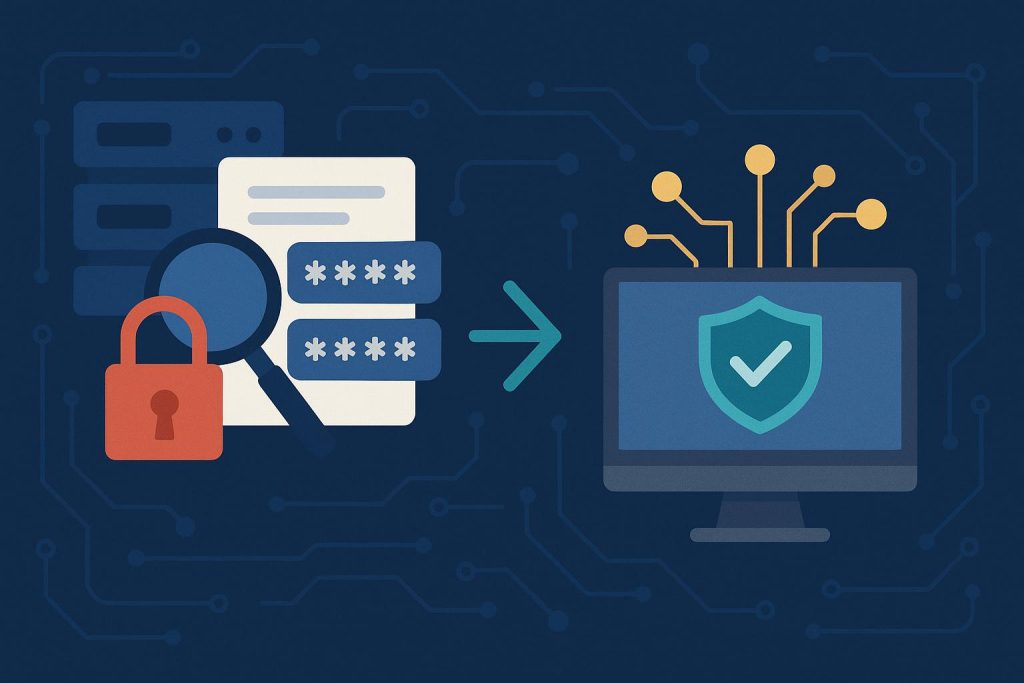
Have I Been Pwned, better known as HIBP, earned its reputation by making breach exposure simple. It gives individuals and organizations a fast way to check whether an email address, domain, or password appeared in known leaked datasets. That simplicity is exactly why people trust it.
For a business, simplicity also creates a ceiling. Security teams need more than confirmation that an email address appeared in a historical breach. They need to understand whether exposed credentials can be used against the company today, which systems are affected, which employees or assets carry the highest risk, and which action should happen first.
HIBP answers an important question: “Was this account exposed?” Professional teams need to answer a sharper question: “Can this exposure become business compromise?”
The Real Business Problem Is Active Identity Risk
Credential exposure changed. Attackers increasingly rely on infostealer malware, session hijacking, browser-stored passwords, SaaS access tokens, API keys, cloud credentials, and device-level context. A leaked password is only one part of the picture. A stolen session cookie can bypass MFA. An exposed token can open access to a SaaS platform. A compromised personal device used by an employee can create a path into corporate systems.
This is where breach lookup becomes too narrow for professional use. A company needs to see the service behind the credential, the type of stolen data, the malware involved, the timing of the exposure, the identity owner, the business function, and the remediation path. The value comes from context, not from the alert itself.
Why HIBP Works Better as a Signal Than a System
HIBP is extremely useful as a trusted breach signal. It supports domain-level searches, password screening, breach checks, paste monitoring, and API access. Many companies should keep it in their security stack, especially for password hygiene and basic exposure awareness.
The gap appears when teams try to operate a full credential exposure program from a breach-checking service. Business exposure management requires continuous discovery, source diversity, prioritization, deduplication, enrichment, integrations, ownership mapping, and response tracking. Security teams need to connect exposed identities to real business assets and move from discovery to remediation quickly.
A single breach record rarely tells the team what matters most. A professional platform should help decide whether an alert is routine, urgent, or incident-level.
What a Business-Grade Alternative Should Provide
A stronger business solution should monitor the places where exposed identities appear before they become widely known. That includes infostealer logs, combo lists, paste sites, Telegram channels, criminal forums, dark web markets, ransomware leak sites, and other cybercrime sources.
It should also translate raw exposure into action. The system should identify the affected service, show whether the exposed account belongs to an active employee, flag privileged identities, detect leaked tokens or sessions, enrich the exposure with device and malware context, and connect the finding to workflows in the identity provider, SIEM, SOAR, ticketing system, or endpoint security stack.
The best alternatives reduce the time between exposure and response. They help teams understand what happened, why it matters, and what to do next.
Lunar: Credential Exposure Built for Business Response
Lunar is one of the most relevant alternatives for companies that want practical credential exposure monitoring without turning the process into a heavy enterprise project. It focuses on compromised credentials, exposed assets, sensitive data, and cybercriminal chatter, with emphasis on the operational context security teams need.
The key advantage is its shift from “breached email” to “actionable identity risk.” Lunar monitors breach dumps and infostealer logs, shows affected services, and provides context such as malware paths, hardware IDs, malware families, and access-token intelligence. That matters because many modern account takeovers depend on stolen sessions and tokens rather than passwords alone.
For security teams, Lunar’s value is in prioritization. A Gmail credential, GitHub token, Okta session, or cloud-related exposure deserves a different response from a low-risk consumer-site leak. Lunar is strongest when the business wants to understand which exposures deserve immediate action and which can move through standard remediation.
SOCRadar: Exposure Monitoring Inside a Broader Threat Intelligence Program
SOCRadar approaches the problem through a wider cyber threat intelligence lens. Its platform combines dark web monitoring, external attack surface management, brand protection, and supply chain risk intelligence. For organizations that want credential exposure as part of a broader external threat view, this positioning makes sense.
SOCRadar is especially useful for companies that care about more than employee credentials. It can help monitor executive exposure, brand abuse, dark web mentions, leaked corporate data, third-party risks, and stealer-log activity. This broader view helps security teams connect identity exposure to reputation risk, vendor risk, and external attack surface risk.
The best fit is a company looking for a consolidated intelligence layer rather than a narrow credential-monitoring tool.
Flare.io: Dark Web and Identity Exposure for Mature Security Teams
Flare.io is another strong alternative, especially for teams focused on dark web visibility and identity exposure. It monitors sources such as Telegram, Tor, I2P, forums, stealer markets, combo lists, and paste sites, then structures the data for security operations.
Flare’s strength is its understanding of modern identity compromise. It treats credentials as part of a wider identity exposure surface that can include sessions, OAuth tokens, API keys, secrets, and other access artifacts. This aligns with how attackers operate today, where the fastest path into a company often comes through stolen access material rather than a classic password dump.
Flare fits mature security teams that want broad cybercrime visibility, structured intelligence, alerting, and workflows around identity exposure.
The Strategic Difference
HIBP helps organizations find known breach exposure. Lunar, SOCRadar, and Flare help organizations manage business risk from exposed identities. That difference matters.
A breach-checking tool gives a security team a data point. An exposure intelligence platform gives the team context, priority, ownership, and response direction. The first helps detect a problem. The second helps reduce the window of opportunity for attackers.
For a small team, HIBP may be enough to support basic password hygiene. For a growing business, credential exposure becomes part of identity security, SaaS security, endpoint risk, cloud risk, and incident response. At that stage, the company needs a platform designed around operational decisions.
Bottom Line
HIBP remains one of the most trusted tools for breach awareness. Businesses should treat it as a useful layer in a wider security program.
Professional use cases require a broader approach. Security teams need visibility into active criminal ecosystems, infostealer-driven exposure, stolen sessions, leaked tokens, affected services, employee ownership, and remediation workflows.
That is where alternatives such as Lunar, SOCRadar, and Flare.io become more relevant. They move the conversation from breach lookup to exposure intelligence, and from awareness to action.