


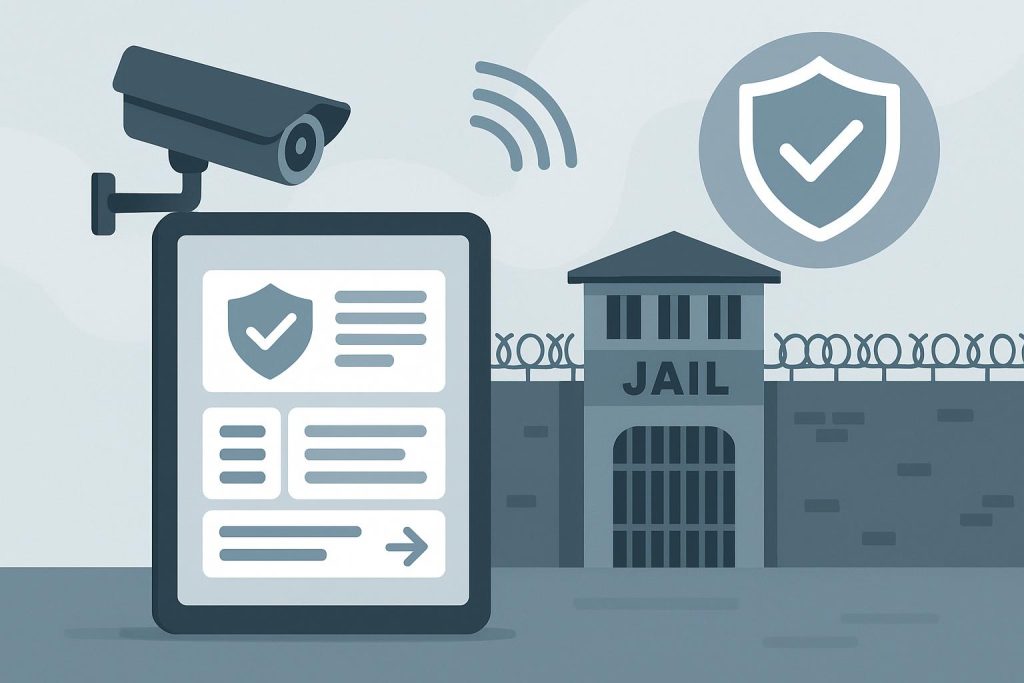
Based in Brentwood, Tennessee, JailCore provides mobile, cloud-based tools that help correctional staff manage inmate activity with greater efficiency. Founded to streamline documentation and reduce administrative burden, the company offers technology that captures real-time data on inmate checks, movements, and interactions through a secure handheld device. By transmitting information instantly to command staff, these systems support timely decision making and reinforce accountability within correctional environments. Drawing from its work during the COVID 19 pandemic and ongoing collaborations with facilities of varying sizes, the organization has demonstrated how digital systems can improve oversight and operational consistency. In exploring the role of technology in promoting safer correctional environments, this article highlights how modern tools strengthen situational awareness, enhance documentation processes, and contribute to long term safety strategies.
The Role of Technology in Promoting Safer Correctional Environments
Safe and effective operations within correctional facilities require detailed oversight, constant vigilance, and timely intervention. Traditional paper-based systems and manual processes often hamper these goals, limiting visibility, delaying response time, and increasing risk. In recent years, technology has enabled correctional facilities to achieve real-time oversight, enhanced accountability, and data-driven decision-making.
Technology helps enhance situational awareness and incident response. Integrated surveillance systems, sensor networks, and body-worn cameras provide staff with a multi-layered view of operations. AI-surveillance access control and alarms, ensuring staff receive alerts when unusual behavior occurs, such as vehicle deviation or perimeter encroachment. These tools make it possible for supervisors to intervene earlier with better information, reducing the delay between incident occurrence and action.
The adoption of technology has helped correctional facilities to increase staff productivity and reduce administrative burden. Technology frees staff from time-consuming manual tasks so that they can focus on more critical safety and security duties. For instance, correctional facilities might adopt digital systems for incident documentation, audit trails, and evidence capture. These tools ensure faster investigation and clearer accountability. When staff are equipped with better tools and less administrative overload, correctional facilities become better monitored, agile, and more responsive to emerging issues.
Technology does more than improve daily operations in correctional facilities; it helps create a lasting culture of safety, transparency, and continuous growth. Modern systems such as integrated control rooms, smart dashboards, and advanced analytics collect information from cameras, access points, movement logs, and incident reports. With this data, leaders can spot trends, allocate resources wisely, and design proactive strategies instead of reacting to problems after they occur. Tools like connected management systems, which bring together video, communication, and access alerts, give administrators a clear and unified view of facility activity, helping them respond quickly to early signs of risk.
Contrabands like phones or weapons are threats in correctional facilities around the world. However, technologies now ensure mobile device detection, improved telemetry, and managed access systems. For instance, fixed and mobile contraband interdiction tools can help identify unauthorized devices and monitor communication. Correctional facilities that use body scanners, video visitation, and other technologies have been noted to be safer and secure compared to those that do not. Strengthening physical controls through technology helps correctional agencies to reduce risk, direct resources towards proactive safety, and streamline operations.
Telemedicine and electronic health records (EHR) have revolutionized correctional healthcare delivery. Correctional facilities can now provide inmates with remote access to doctors and specialists, reducing the security risks and costs associated with off-site hospital trips. Telehealth systems improve continuity of care, minimize wait times, and ensure that medical histories are securely maintained and easily shared among approved providers. EHR systems also reduce medication errors and enable faster emergency responses, contributing to both inmate welfare and institutional safety.
Technology is not meant to replace human judgment or compassion. Instead, it supports staff by reducing blind spots, streamlining communication, and providing real-time awareness that protects both employees and residents. When officers and administrators have reliable tools to monitor, document, and act, they can focus more on prevention and less on crisis response.
By improving situational awareness, reducing errors, increasing accountability, and enabling long-term learning, technology turns safety into an achievable and sustainable standard. Facilities that integrate these tools thoughtfully and invest in proper training will not only strengthen security but also foster trust, rehabilitation, and operational excellence.
About JailCore
JailCore is a Brentwood, Tennessee based provider of mobile, cloud-supported inmate management tools that help correctional facilities improve efficiency and oversight. Its handheld device captures real-time information on inmate interactions, head counts, movement, and health related observations, transmitting data directly to command staff for review. The organization has supported facilities nationwide, including during the COVID 19 pandemic when its tools assisted officers in evaluating inmate health from a safe distance. JailCore continues to focus on secure data transmission, accountability, and streamlined documentation for correctional environments.