
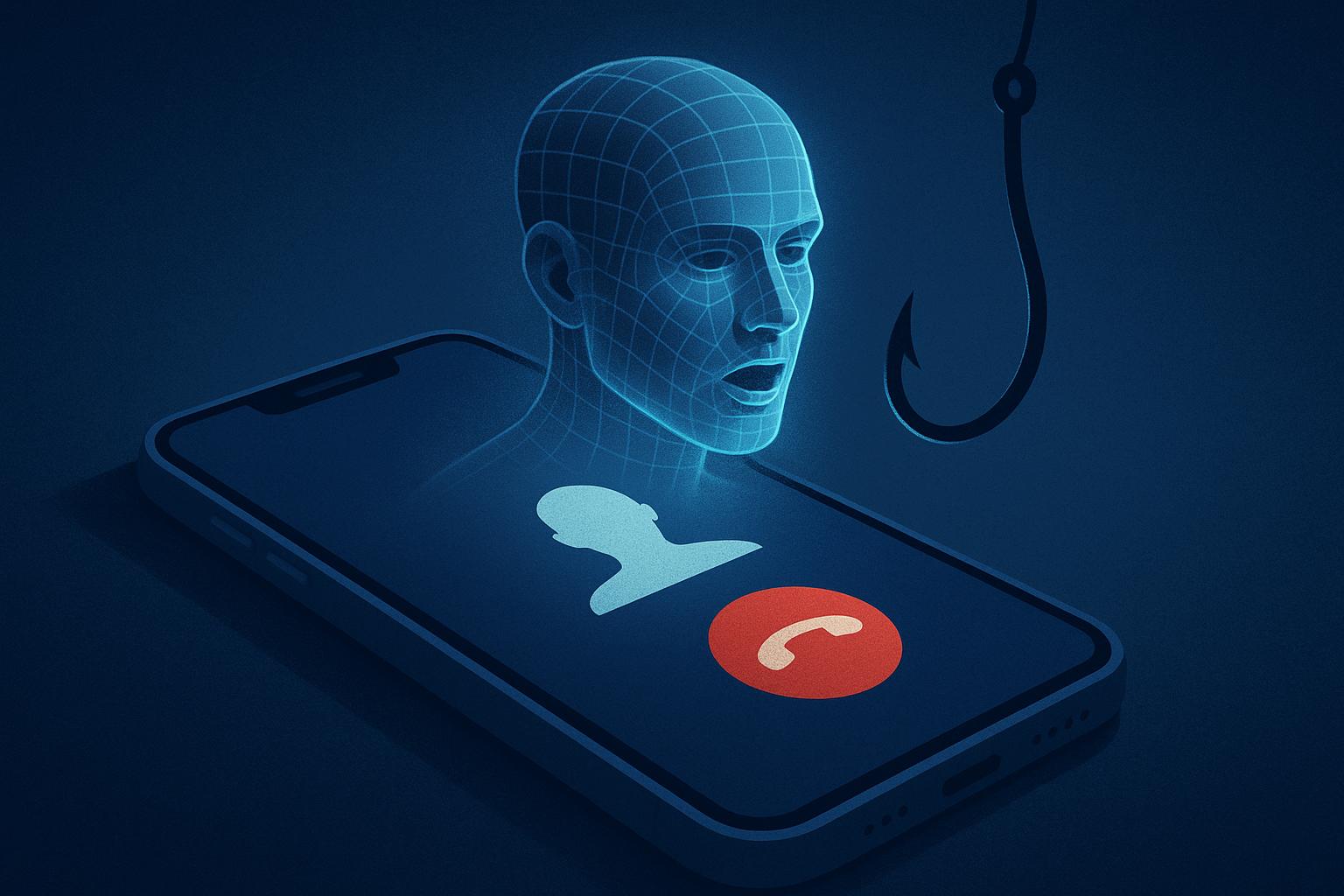
It used to be that you could spot a scam a mile away. We all remember the emails from the “Prince of Nigeria” offering us millions in gold bullion if we just handed over our bank details. They were laughable, riddled with spelling errors, and generally only caught the most vulnerable or technically illiterate among us.
But if you’re still looking for typos and bad grammar to identify a threat in 2026, you’re fighting a modern war with medieval weapons. The landscape of social engineering has shifted seismically. We’ve moved from “Phishing” (emails) and “Smishing” (SMS) to the far more terrifying era of “Vishing” (Voice Phishing). And unlike the scams of the past, this isn’t just about stealing your password. It’s about stealing your identity, your voice, and your trust.
The Democratisation of Deepfakes
For a long time, “Deepfake” technology was the domain of Hollywood studios and high-level state actors. It required massive computing power and hours of source audio to create a convincing clone of a human voice.
Today, however, the barrier to entry has collapsed. Generative AI models can now clone a person’s voice with as little as three seconds of audio. That’s all it takes. A three-second clip of you answering the phone, or a snippet of audio ripped from your latest Instagram Story, is enough for a bad actor to feed into an AI synthesiser.
Once they have that print, they can type any text they want, and the AI will speak it in your voice. It captures your cadence, your accent, and even the subtle “ums” and “ahs” that make human speech feel authentic.
The “CEO Fraud” 2.0
The most lucrative target for these attacks is the corporate sector. We’re seeing a massive spike in what is known as “CEO Fraud.”
Imagine this scenario: You’re a finance director at a mid-sized logistics firm. It’s 4:45 PM on a Friday. Your phone rings. It’s the CEO. You recognise his number (because it’s been spoofed) and you recognise his voice immediately. He sounds stressed. He tells you that a major acquisition deal is about to fall through unless a £50,000 deposit is wired to a supplier immediately. He’s stuck in a meeting and can’t authorise it himself. He needs you to bypass the usual protocol “just this once.”
The voice is perfect. The urgency is palpable. You want to be the hero who saves the deal. So, you make the transfer.
Five minutes later, you text the CEO to say it’s done. He texts back: “What transfer?”
This isn’t science fiction. In 2025 alone, UK businesses lost an estimated £140 million to AI-enhanced voice scams. The attackers aren’t hacking the firewall; they’re hacking the human.
The Psychology of the Scam
Why does this work so well? It comes down to cognitive bias. We are hardwired to trust our ears. We can be sceptical of an email address that looks slightly wrong (like ceo@company-updates.com), but when we hear a familiar voice, our brain bypasses the “verification” stage and goes straight to “action.”
Cyber criminals know this. They are leveraging our biological hardwiring against us. They’re also using “Contextual AI” to generate scripts that sound plausible. They can scrape your LinkedIn to know who your colleagues are, what projects you are working on, and when your deadlines are.
The Odds Are Rigged
In the world of cybersecurity, we often talk about risk management as a game of probability. But the introduction of AI has fundamentally changed the rules of that game.
Defending a corporate network in 2026 is a lot like playing blackjack at a casino where the dealer can see your cards, but you can’t see theirs. In a fair game, you can calculate the odds, play the percentages, and hope to come out on top. You have tools, like the Sister Site Comparison website, to provide you with facts and help you to identify scams before you part with money. But against an AI-driven adversary, the “house edge” is overwhelming. The attacker doesn’t need to get lucky every time; they only need to get lucky once. You, the defender, have to be lucky every single time.
It’s a statistical asymmetry that keeps CISOs (Chief Information Security Officers) awake at night. To return to the casino metaphor, the attackers are playing with a loaded deck, using automated bots to dial thousands of numbers an hour until they find a human who is tired, distracted, or simply too helpful for their own good.
The “Grandparent Scam” Goes Nuclear
It’s not just businesses that are suffering. The most heart-breaking application of this tech is the “Grandparent Scam.”
Scammers will target elderly individuals, using a cloned voice of their grandchild. The phone rings, and a panicked voice says: “Grandma, I’m in trouble. I’ve been arrested. I need bail money.”
Because the voice is identical to their grandchild’s, the victim panics. The scammers then keep the line open, preventing the victim from calling the grandchild’s actual number to check. They demand payment in crypto or gift cards. It is a brutal, predatory tactic that destroys lives, and it is becoming terrifyingly common.
How to Build a “Human Firewall”
So, how do we defend ourselves against a threat that sounds exactly like our friends and bosses? The answer lies in “Zero Trust” protocols, applied to our personal lives.
1. Establish a “Safe Word”:
This sounds like something out of a spy movie, but it is the most effective low-tech defence we have. Agree on a “challenge phrase” or a safe word with your family and close colleagues. If you get a call from your “daughter” asking for money, ask for the safe word. If the voice on the other end can’t provide it, hang up. An AI can clone a voice, but it cannot guess a secret shared only between two people.
2. The “Call Back” Rule:
If you receive an urgent request for money or data, hang up. Do not engage. Then, call the person back on their known, saved number. If it was really them, they will answer. If it was a spoofer, you will likely get their actual voicemail (or the real person will answer and be very confused).
3. Lock Down Your Audio:
Be mindful of what you post online. That video of you doing a “Day in the Life” on TikTok? That is training data. If you have a high-profile job, consider restricting who can see your personal content. The less “digital dust” you leave behind, the harder it is to clone you.
4. Biometric Scepticism:
We are moving towards a world where voice-ID banking is no longer secure. Banks are already scrambling to replace voice verification with “Passkeys” and hardware tokens (like YubiKeys). If your bank offers voice-ID login, disable it. It is a security vulnerability, not a feature.
The Future: AI vs. AI
The arms race is only just beginning. We are already seeing the emergence of “Deepfake Detection” tools – software that analyses the audio wave for the tiny, imperceptible artefacts that synthetic speech leaves behind.
In the near future, your phone might have a built-in “Lie Detector” light that flashes red when it detects a synthetic voice on the line. But until that technology is standard, your best defence is a healthy dose of paranoia.