
Based in Miami, Florida, Andres Isaias is the Chief Executive Officer of Restem Group, Inc., where he oversees operations, strategic alignment, partnerships, fundraising, and community outreach. Since joining the company in 2018, he has also represented Restem at investor and industry events, including the BIO International Convention and the Jones Trading Technology and Healthcare Conference. His work in cell therapeutics connects operational leadership with research questions involving the development of safe treatments for diseases with high unmet medical needs. In that context, immune signaling is a relevant research target because it can help investigators define how a cellular product may influence immune activity, how that activity can be measured, and how manufacturing affects results. Isaias studied business and engineering at Tulane University and maintains memberships in Biocom California, the California Life Sciences Organization, and the Biotechnology Innovation Organization.
Inflammation is not a single process that cell therapy research can simply switch off. It involves signals exchanged among immune cells, body tissues, and molecules circulating in the blood. For researchers developing cellular products, the key question is which part of this system a specific product may affect. A credible mechanism must be narrow enough to test while accounting for the complex conditions in which the cells are given.
That complexity makes immune signaling an important area of research rather than a universal explanation. A cellular product may act directly on immune cells, influence signaling pathways, or respond to conditions already present within tissue. Each mechanism operates differently. Because a product's cellular source, manufacturing process, and intended use can all influence its biological activity, findings from one product should not be assumed to apply to another.
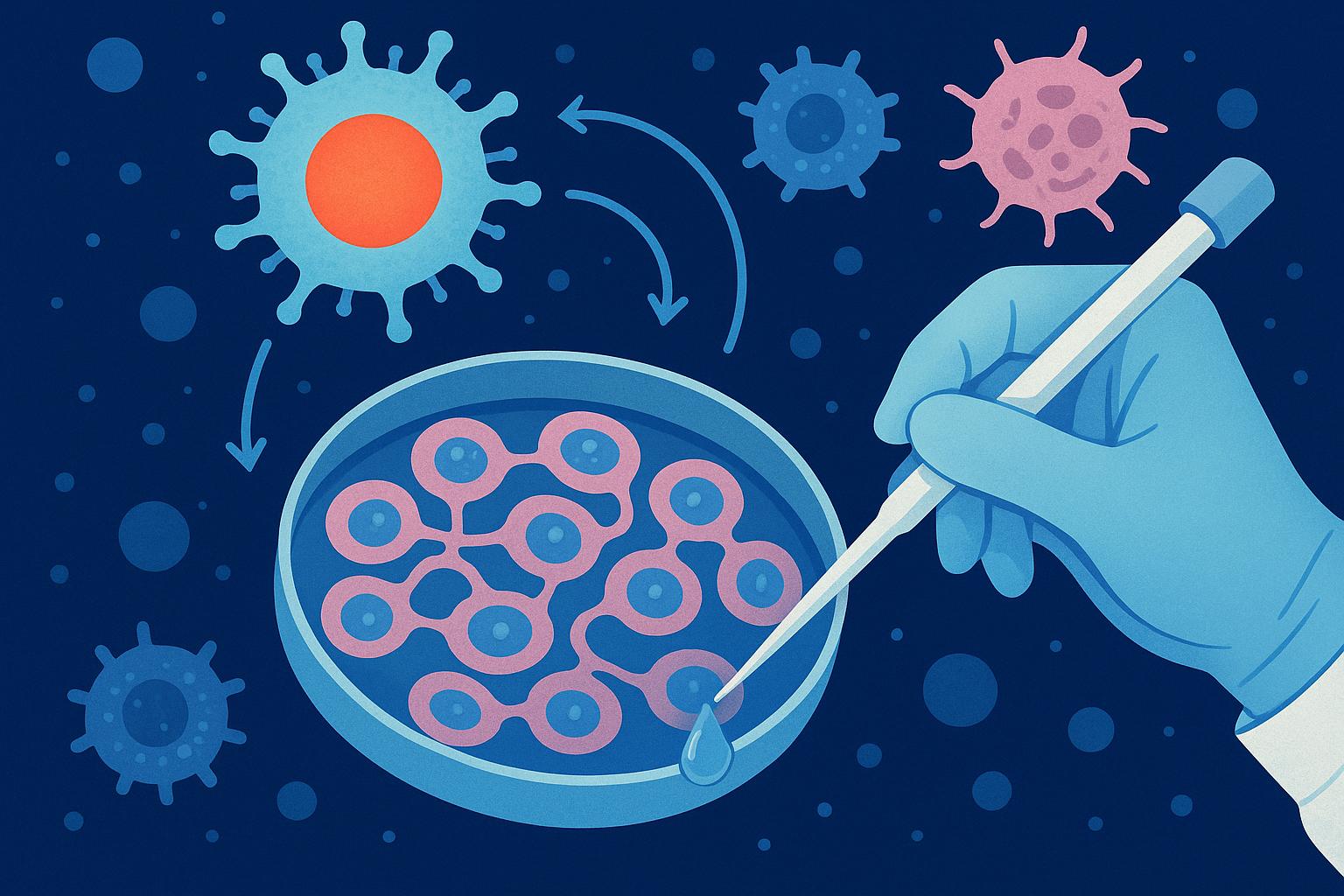
Mesenchymal stromal cell research illustrates this product-specific question. In laboratory studies, investigators often place these cells with activated immune cells and measure changes in immune-cell behavior or signaling molecules. Such experiments can identify a potential pathway worth studying. They cannot, by themselves, establish what occurs after administration in people. Their value lies in creating a focused hypothesis that later research can challenge with more relevant models and clinical observations.
The primary case is the potency assay, a test designed to measure biological activity that is relevant to a product’s intended effect. For an immune-modulating cell product, one assay may examine whether the preparation changes the activity of cultured immune cells. A second may measure molecules released by the cells under a defined stimulus. These tools connect an abstract phrase such as “immune modulation” to observable laboratory results, which can be compared from batch to batch.
However, a single test may not capture a cell product’s full behavior. Researchers have therefore explored assay matrices that combine several measurements, including gene activity, surface markers, secreted proteins, and immune-cell responses. Each measurement can illuminate a different part of the proposed mechanism. Used together, they may help distinguish a preparation with the intended biological profile from one that has changed during production or storage.
This approach also sharpens early clinical research. Trials can collect safety information while examining biomarkers that correspond to the preclinical mechanism, such as changes in selected immune-cell populations or circulating signaling molecules. Biomarkers do not provide a benefit on their own, but they can show whether the biological process observed in the laboratory is detectable in people. That bridge is important when researchers decide which questions should move into larger studies.
Manufacturing is part of the signaling question, not a separate technical task. The Food and Drug Administration notes that mesenchymal stromal cell populations can differ by donor and that some biological activities can decrease with extended culture. If immune activity is central to a product’s rationale, developers need tests that detect relevant changes before a lot is released. Product characterization, process control, and potency measurement then work together to protect the interpretability of later trial results.
Immune signaling gives cell therapy research a structured way to move from a concept to a testable program. Researchers must define the product, identify a measurable biological activity, and examine that activity during manufacturing and clinical study. This approach does not eliminate the uncertainty of complex biology. It clarifies what remains uncertain and helps determine the next question to investigate.
About Andres Isaias
Based in Miami, Florida, Andres Isaias serves as Chief Executive Officer of Restem Group, Inc., where he oversees operational efficiency, organizational performance, strategic alignment, partnerships, and financial stewardship. He has represented the company at investor and industry conferences and leads efforts connected to the development of safe cell-based therapies. He studied business and engineering at Tulane University and maintains memberships in Biocom California, the California Life Sciences Organization, and the Biotechnology Innovation Organization.